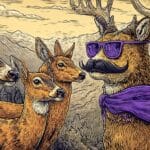
It is clear that a company with Google’s resources cannot stick to boring product names. Nano Banana 2 sounds more like a candy from a Japanese konbini store than one of the world’s most powerful AI tools for image generation. But behind the laughable name lies something actually quite impressive, which also shakes up the increasingly intense arms race between tech giants.
Google DeepMind presented Nano Banana 2 on February 26, 2026, officially known as Gemini 3.1 Flash Image. It is their latest image generation model and the idea is simple: take the advanced intelligence from Nano Banana Pro and add the speed of Gemini Flash. The result is a tool that delivers Pro-level quality without needing to take a coffee break while the image renders.
Table of content
Brief history of the model
The Nano Banana series has progressed quickly. The original model was launched in August 2025 and quickly went viral, especially in countries like India where millions of images were generated via the Gemini app. Nano Banana Pro arrived in November with studio-like quality control and set new standards for what AI image generation could achieve. Now it is time for the next step, and that step is significant.
Nano Banana 2 retains some of the high-quality features from the Pro model but generates images faster. It may sound simple, but in practice, it solves one of the most frustrating problems with advanced image generation tools: you no longer have to choose between quality and speed.
What is new in Nano Banana 2?
Here are the most important new features in the new model:
- Lightning-fast image generation with Pro-level quality
- Advanced world knowledge and real-time grounding via web search
- Improved text rendering and language localization
- Character consistency for up to five figures and fourteen objects
- Stricter adherence to instructions for complex requests
- Production of images from 512px up to 4K in any image format
- Improved visual quality with sharper details and richer textures
- Deployment across Google’s entire ecosystem including Gemini, Search, Flow, Ads and developer API
- SynthID watermarks combined with C2PA Content Credentials for tracking
Lightning-fast image generation with Pro-level quality
The technical secret behind the model’s speed is a method called Latent Consistency Distillation. Traditional diffusion models require 20 to 50 iterative steps to produce an image, roughly like baking bread from scratch every time. Nano Banana 2 predicts the final result in just 2 to 4 steps, which is like having a bread machine with a turbo mode but with the same final outcome. The model clocks in under 500 milliseconds on mid-range mobile hardware and can generate about 30 images per second at 512px resolution, which is practically real-time synthesis.
This solves a fundamental dilemma that has long plagued AI image generation: either you got fast but mediocre results, or good but slow. With Nano Banana 2, Google has removed that choice. The model delivers pro-level quality at flash speed and that is not just a marketing claim but a technical reality grounded in architectural changes.
Advanced world knowledge and real-time grounding via web search
One of the more revolutionary changes is that the model now leverages Gemini’s knowledge base and fetches real-time information and images from web searches to more accurately render specific subjects. This means that if you request an image of an actual monument, a specific brand’s product, or a real location, the model retrieves actual visual references instead of inventing something that looks roughly correct.
This is a welcome change. Previously, AI image generation was a bit like asking someone to draw a house they had never seen; they knew what a house generally looked like but lacked the specific details that make the result believable. Now the model has access to an even broader knowledge base in real time, and that makes the model unique. It also makes the model capable of creating infographics based on actual data, converting notes into charts, and generating data visualizations that are accurate and well-founded rather than invented.
Improved text rendering and language support
Generating readable and correct text inside AI images has long been the industry’s Achilles heel. The results have sometimes resembled mysterious pseudo-script as if a letter-allergic octopus had been asked to draw the alphabet. Nano Banana 2 addresses this directly with significantly improved text rendering for everything from marketing mockups to postcards.
But it doesn’t stop at generating correct text. The model now also supports localization, meaning you can ask it to translate and adapt text inside an existing image into another language. A poster, sign, or advertising campaign created in Swedish can be adapted to Hindi, Arabic, or Japanese without having to redo the entire production. For marketing departments with a global reach, this is a feature that saves both time and budget.
Character consistency for up to 5 figures and 14 objects
One of the most long-awaited improvements for everyone working with visual storytelling is character consistency. The model can now keep track of up to five characters’ appearances and fourteen objects’ properties in a single workflow. It may sound like a technical detail, but in practice, it solves a problem that has long made AI image generation difficult to use in comics, storyboards, and narrative contexts.
Previously, it was common for a character to change hair color, nose shape, or clothing style between each image in a series. It was like hiring an artist with an extremely poor short-term memory. Now, you can create a coherent visual world with consistent characters and objects, opening up possibilities ranging from children’s book illustrations to commercial campaigns with recurring characters. For example, a designer can ask the model to generate the first, middle, and last frames of an animated scene and get consistent characters throughout the sequence.
Follows instructions better with complex prompts
The precision of instruction following has improved significantly. The model now adheres more strictly to complex requests and captures the specific nuances of an idea, meaning the image you get is actually the image you asked for. This is a more subtle but enormously important advancement.
Previously, AI image generation was somewhat like explaining to a four-year-old exactly how a house should be drawn; you would get it roughly right but with unexpected creative interpretations. When presenting a complex scenario with multiple variables, there was a high chance that the model ignored half of the instructions and improvised the rest. With Nano Banana 2 the model is better at actually delivering what was requested without adding unnecessary elements or omitting specified details. For professional users working with precise design specifications this is the change that truly makes a difference in daily work.
Production of images from 512px up to 4K in any image format
Nano Banana 2 supports resolutions from 512px all the way up to full 4K quality in a wide selection of image formats. This makes the model usable for the entire spectrum of modern creative workflows from Instagram’s square format to widescreen backgrounds for conference rooms. It is a practical but important change that ensures the tool is no longer limited to one specific type of output.
Previously, high resolution required either the Pro model or post-processing which added steps and delays to the workflow. Now you can specify the exact desired resolution and image format directly in the prompt and get production-ready output without intermediaries. For advertisers and content producers working across multiple channels and platforms simultaneously this is a welcome addition.
Improved visual quality with sharper details and richer textures
Besides the speed improvements, the model has received a clear upgrade in visual quality compared to the original model. Nano Banana 2 delivers vibrant lighting, richer textures, and sharper details, maintaining high-quality aesthetics at the speed expected from Flash models. It is a distinction worth pointing out: faster image generation has historically meant lower image quality, but here Google has managed to reverse that trend.
In practical tests, the improvement is most noticeable in complex scenes with many elements, in realistic portraits, and in images with detailed backgrounds. The lighting feels more natural and consistent, the textures more tactile, and details like hair, fabric, and reflections are handled with a precision previously reserved for the Pro model.
Rollout in Google’s entire ecosystem
Nano Banana 2 is being rolled out widely and quickly. In the Gemini app, it replaces Nano Banana Pro as the default model in the Fast, Thinking, and Pro modes, but paying subscribers to Google AI Pro and Ultra retain access to the Pro version for the most demanding tasks via a simple choice in the interface. It is a smart strategy: offer good enough for free to attract people, and save the best for those willing to pay.
In Google’s search engine via Google Lens and in AI Mode, the model is rolling out to 141 countries and territories on mobile and desktop. The video tool Flow has made Nano Banana 2 the default model and makes it available without credit cost. Google’s ad tools also gain access, signaling that AI-generated images in advertising are becoming the standard rather than the exception. For developers, the model is available via Gemini API, AI Studio, Vertex AI, and Gemini CLI, making it easily integrated into external products and services.
SynthID and C2PA for tracking AI-generated content
An aspect that deserves attention in a time of escalating deepfakes and disinformation is Google’s work on labeling AI-generated content. The SynthID technology, which embeds invisible watermarks in AI images, is now combined with the open C2PA standard for content certification. C2PA is an industry initiative with participants including Adobe, Microsoft, OpenAI, and Meta. The combination provides a more transparent picture not only of whether AI was used to create the content but also how and for what purpose.
Since the launch of the SynthID verification feature in the Gemini app in November, it has been used over 20 million times, indicating a genuine need among users to be able to determine what is AI-created. With forgeries and deepfakes becoming an increasing societal problem, these tools are important, even though no tracking technology is one hundred percent secure against future attempts to bypass it. C2PA verification will soon also be available in the Gemini app, further strengthening the ability to verify the origin of images encountered online.
Leading generative AI for images
AI image generation is one of the hottest battles in the tech industry right now. Competition is intensifying from OpenAI, Adobe, and ByteDance, all preparing to take market shares. OpenAI responded to Nano Banana’s success with GPT Image 1.5, and in direct comparisons it is close. Adobe has chosen a neutral strategy and lets its Firefly platform offer models from Google, OpenAI, FLUX, and Runway under one roof, making them more of a playing field than a competitor.
ByteDance has faced setbacks from major Hollywood studios over copyright infringement related to its AI video tool, highlighting that legislation and copyright issues still hang like a dark cloud over the entire industry. Google has reloaded significantly with Nano Banana 2. The question is whether a fast and affordable tool is enough to win a war that has only just begun.
Sources
https://blog.google/innovation-and-ai/technology/ai/nano-banana-2
F.A.Q
Varför heter det egentligen Nano Banana?
Det korta svaret är att Google använde ett internt kodnamn som råkade bli viralt. Det långa svaret är att AI-bildgenereringsmodeller traditionellt fått tråkiga tekniska namn som “Imagen 3” eller “Gemini 2.5 Flash Image” och att ingen utanför en serverhall bryr sig om sådana namn. Nano Banana lät roligt, spreds som en löpeld på sociala medier, och Google insåg att ett skrattretande namn är värt mer i organisk marknadsföring än en miljardreklam kampanj. Det officiella tekniska namnet är Gemini 3.1 Flash Image, men det är ungefär lika sexigt som att namnge sin katt “Katt”.
Hur kan en bild genereras på under en halv sekund?
Det handlar om en teknik kallad Latent Consistency Distillation. Traditionella AI-bildmodeller arbetar som konstnärer som börjar med ett vitt papper och lägger till detalj efter detalj i upp till 50 separata steg, ett tidsödande process som kräver enorma beräkningsresurser. Nano Banana 2 har i stället tränats att hoppa direkt till slutresultatet på bara 2 till 4 steg.
Äger man bilden man genererar med Nano Banana 2
Svaret beror på var man bor och hur aktivt man arbetade med prompten. I Sverige och resten av EU är utgångspunkten tydlig: upphovsrätt kräver att en människa har gjort fria och kreativa val. Skriver man en enkel prompt som “en katt på en strand” och trycker på enter har man enligt Patentverkets bedömning ingen upphovsrätt på resultatet. Bilden hamnar i praktiken i en juridisk limbo där vem som helst kan använda den fritt, inklusive en konkurrent eller en reklambyrå.
Det finns dock ett undantag som kinesisk domstolspraxis pekat ut: om man gav ett mycket stort antal detaljerade instruktioner och kan bevisa att man kan återskapa exakt samma bild med samma kommandon kan man hävda upphovsrätt. En kinesisk konstnär fick 2023 upphovsrätt på en AI-bild efter att ha gett verktyget Stable Diffusion över 500 specifika instruktioner. Det är ett vägledande men ensamt prejudikat som ännu inte prövats i EU eller Sverige.
Om du vill ändå var mer på den säkra sidan: Redigera alltid det AI-genererade materialet i efterhand, lägg till egna kreativa inslag i Photoshop eller liknande verktyg, och dokumentera din kreativa process. Det är det enda sättet att stärka ett upphovsrättsanspråk på AI-genererade bilder under nuvarande lagstiftning.
Kan Nano Banana 2 generera bilder som bryter mot någon annans upphovsrätt?
Ja, och det oroväckande är att det kan hända utan att man är medveten om det. Nano Banana 2 är tränad på miljarder bilder från internet och dessa bilder innehåller naturligtvis upphovsrättsskyddat material. Det innebär att modellen i teorin kan generera output som liknar en specifik fotografs stil, en illustratörs signaturteckning eller en designers unika estetik, och utdata kan vara tillräckligt lik originalet för att ett domstolsärende ska bli aktuellt.
Som användare är det du som bär det juridiska ansvaret, inte Google. Googles användarvillkor är tydliga: om en AI-genererad bild av någon anledning gör intrång i tredje parts upphovsrätt är det användaren som sitter med den juridiska smällen. Det är ungefär som att köpa en begagnad cykel av en kumpan och sedan bli åtalad för stöldgods utan att ha vetat att cykeln var stulen. Lagen är inte alltid rättvis, men den är konsekvent.
Kan man göra varumärkesintrång med Nano Banana 2?
Absolut, och enklare än man tror. Modellen kan, trots inbyggda filter, generera bilder med logotyper, varumärken eller förpackningsdesign som liknar kända märken tillräckligt mycket för att skapa förvirring på marknaden. Om man ber om “en smartphone med ett stilrent äpple på baksidan” och sedan använder resultatet i en reklamkampanj riskerar man en stämningsansökan från Apple, oavsett att det var en AI som skapade bilden.
Janssen 2026 meddelade Google att de skärpt filtren i sina bildmodeller för att begränsa generering av kända IP-karaktärer och varumärkeslogotyper. Det är en reaktion på att tidigare versioner av Nano Banana ibland genererade Disney-karaktärer, kändisansikten och välkända logotyper utan nämnvärt motstånd. Dessa filter är dock inte idiotsäkra och kan kringgås med tillräckligt kreativa prompter, vilket gör att ansvaret i slutändan alltid hamnar hos användaren.
Kan man använda Nano Banana 2-bilder kommersiellt?
Man kan använda dem kommersiellt, Google ger användarna kommersiella rättigheter till output, men man bär hela det juridiska ansvaret för att bilden inte gör intrång i tredje parts rättigheter. Det är en viktig distinktion. Googles tillstånd att använda bilden fritar inte från ansvar om bilden råkar likna ett skyddat fotografiskt verk, en känd konstnärs stil eller ett registrerat varumärke.
Experter rekommenderar att man för kommersiellt känsliga projekt alltid redigerar AI-genererade bilder manuellt för att tillföra kreativa val, aldrig anger kända varumärken, stilar eller karaktärer i prompten, samt dokumenterar sin kreativa process ifall en tvist uppstår. För stora företag med signifikant annonsbudget rekommenderar branschjurister att ta en paus och invänta EU-domstolens avgörande hösten 2026 innan man sätter Nano Banana 2-genererade bilder i större kampanjer. Risken för efterhandsanspråk är inte obefintlig och det juridiska läget är på väg att förändras.
Skyddar SynthID-vattenstämpeln mot intrångskrav?
Nej, och det är en vanlig missuppfattning. SynthID är ett verktyg för att identifiera att en bild är AI-genererad, inte ett juridiskt skydd mot upphovsrättskrav. Vattenstämpeln hjälper mottagare att förstå att en bild skapades med AI, men den ger inget som helst skydd om bilden i sig gör intrång i en tredje parts upphovsrätt eller varumärkesrättigheter.
Det finns dessutom en praktisk begränsning: SynthID försvinner eller försvagas om bilden screenshotas, sparas i fel filformat eller genomgår kraftig bildredigering. C2PA-certifieringen som Google kopplat till SynthID är ett steg i rätt riktning, men även den bygger på att mottagaren aktivt letar efter metadata i bilden, vilket de allra flesta aldrig gör. Verktygen hjälper samhället förstå att AI-bilder existerar, men de skyddar inte den som genererade dem från juridiska konsekvenser.